
Apr,2026

Follow
The term “End of Voyage” is an operational declaration by a carrier to terminate a voyage short of the contractual port of discharge.. It is not a legal doctrine in Maritime law, but relies on the authority carriers have under their standard Conditions of Carriage.. What is “End of Voyage” and where does it appear […]
Mar,2026
Follow
The term Non-Vessel Operating Common Carrier was formally defined under the US Shipping Act of 1984 (46 U.S.C. § 40102).. This Act codified the NVOCC as an operator that issues its own bills of lading and accepts carrier liability without owning or operating vessels..The NVOCC has evolved into one of the most commercially versatile roles in container […]
Mar,2026
Follow
This is one of those distinctions that trips up a LOT of people in global trade, including some who have been in the business for years.. A Document of Title is a document that gives the person holding it the right to claim the goods described in that document.. The most common example in shipping is […]
Mar,2026
Follow
A missing or delayed bill of lading is not just a documentation problem; it is a financial and legal exposure that can lock up credit lines for years.. This explainer applies real carrier formats and operational insight to help you understand the bank guarantee process, navigate the risks, and push for early resolution before costs […]
Mar,2026
Follow
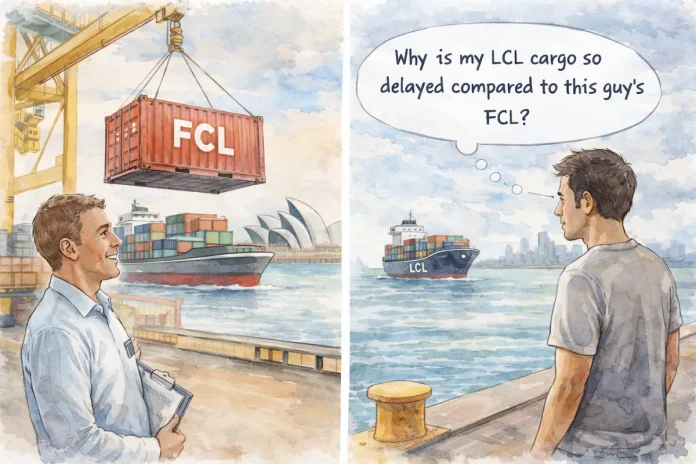
FCL and LCL cargo moving to the same destination port can have transit time differences of 10 days or more.. An FCL container from Durban to Sydney takes approximately 31 days, while an LCL shipment on the same route can take 43 days or longer, because LCL cargo is reworked at a transhipment hub like […]


0